



Using Propensity Modeling to Drive Smarter Customer Engagement
By Heather Siebken, Director, Councils & Marketing | 4-minute read
Utilities have never had more customer data at their fingertips. Between AMI, billing systems, digital interactions, customer service records, and program participation history, the challenge is no longer collecting information; it’s determining how to use it to create better customer experiences and improve business outcomes.
Utilities often rely on customer segmentation to shape communications and program outreach. Grouping customers by demographics, rate class, or geography can certainly improve messaging, but these traditional approaches don’t always predict how customers will respond.
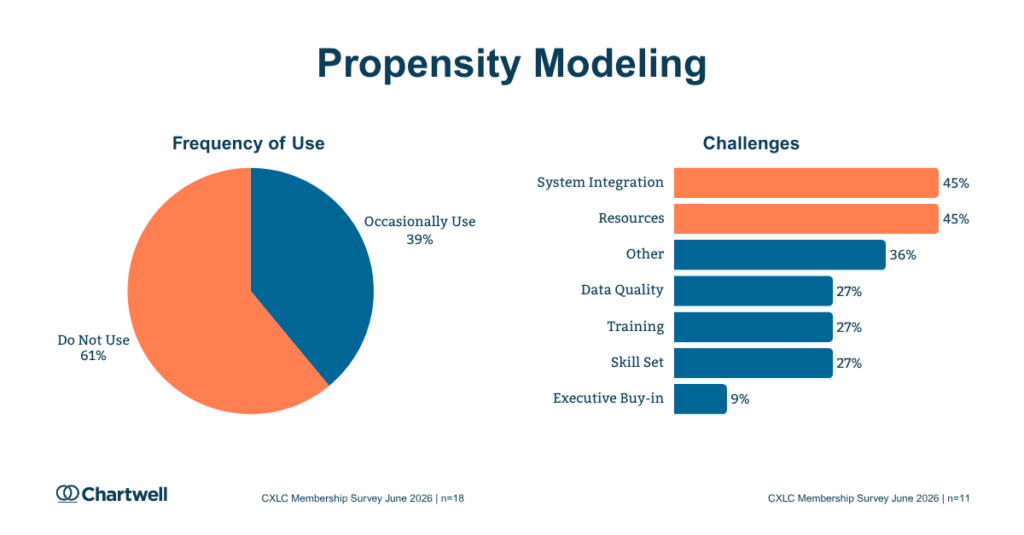
Despite the significant value, a recent poll during the June Customer Experience Council meeting2, identified that less than half of the utility attendees are turning to propensity modeling to answer a more valuable question: What is this customer most likely to do next? The most common reason cited was challenges with system integration and resources.
Propensity modeling uses historical customer data and predictive analytics to estimate the likelihood that a customer will take a specific action, such as enrolling in paperless billing, participating in an energy efficiency program, adopting AutoPay, or falling behind on payments. Instead of broad campaigns designed for everyone, utilities can prioritize customers who are most likely to respond, resulting in better outcomes while reducing unnecessary outreach.
The value extends well beyond marketing. The result is a more personalized, efficient, and effective approach to customer engagement.
Customer service organizations are using predictive models to identify customers who may need proactive payment assistance before accounts become seriously delinquent. Digital teams are targeting customers most likely to adopt self-service tools, reducing call volume while improving convenience. Energy efficiency groups are improving participation rates by focusing outreach on customers with the highest likelihood of enrollment rather than casting a wide net. SMUD applies a similar data-driven approach by combining customer and operational data to identify high-impact programs2, segment customers, and tailor outreach, as Lisa Simpson recently presented at a council meeting.
Many utilities are also using propensity models to identify customers who may contact the call center after receiving a high bill or following planned outages. Proactive communications can answer common questions before customers pick up the phone, improving both the customer experience and operational efficiency. Check out this resource2 that identifies where propensity modeling brings value, can be used, the common sources of data, and best practices.
Building these capabilities doesn’t require a massive transformation. Many successful programs begin with a single business objective.
Some high-value use cases include:
- Increasing program participation
- Improving payment outcomes
- Accelerate digital adoption
- Increasing customer satisfaction
- Reducing peak demand
- Stabilizing contact center staffing
As organizations gain confidence in predictive analytics, they often expand into additional use cases across customer experience, marketing, operations, and revenue management.
In this webinar1, DTE tells us how they drove a 300% increase in customer engagement through the use of propensity modeling. Their experience is also highlighted in Chartwell’s case study, Customer Engagement: Machine Learning is the Next Frontier1, which explores how advanced analytics helped improve customer outreach and identify opportunities to better serve customers.
Of course, successful propensity modeling depends on quality data. Customer demographics alone are rarely enough. Utilities often combine billing history, payment behavior, AMI data, digital interactions, customer service contacts, program participation, and communication preferences to create more accurate predictions. Equally important is establishing clear success metrics and continuously refining models as customer behaviors evolve.
As utilities mature their analytics capabilities, machine learning and advanced data strategies are helping uncover deeper insights that improve customer satisfaction and operational performance. Southern California Edison explores this approach in Chartwell’s webinar, Improving Customer Satisfaction Through Advanced Analytics and Data Strategies1.
Propensity modeling is also part of a broader analytics maturity journey.
Many utilities begin with mass marketing before advancing to customer segmentation. Predictive models represent the next stage, allowing organizations to anticipate customer behavior rather than simply describing it. More mature organizations continue evolving toward “next best action” recommendations and eventually real-time personalization, where customer interactions are tailored dynamically across channels. Heather Siebken, Customer Experience Council lead, discusses this journey in June’s CX Council meeting2.
The technology behind predictive analytics continues to mature, but the underlying goal remains straightforward: deliver the right message to the right customer at the right time.
For utilities facing growing customer expectations, limited resources, and increasing pressure to improve program performance, propensity modeling offers a practical way to become more proactive. Rather than reacting after customers make decisions, utilities can better anticipate customer needs, personalize engagement, and improve business outcomes across the enterprise.
As customer data becomes richer and AI capabilities continue to expand, predictive customer engagement is poised to become a core competency for leading utilities.
1Requires Insight Center Membership | 2Requires Customer Experience Leadership Council Membership
***

Heather Siebken is a product and marketing leader and customer experience expert with more than 25 years of experience driving innovation, customer engagement, and strategic growth. She currently leads councils and marketing at Chartwell, where she designs industry forums and content that help utilities establish a customer experience strategy to navigate customer expectations and digital transformation.
Previously, Heather led product development and marketing at Omaha Public Power District, where she oversaw a broad portfolio of customer energy solutions spanning energy efficiency, demand response, electrification, and customer assistance programs. She is known for her strategic foresight, storytelling, and ability to translate complex trends into actionable business outcomes.
