




Emergency Management Is No Longer a Department but an Enterprise Capability
Utility emergency management has been defined by plans, procedures, and response teams for years. Those elements remain essential, but they are no longer enough.
The latest Emergency Management Leadership Council guideline, Integration of Emergency Management Across the Enterprise*, reflects a clear message from utility emergency management professionals: Today’s greatest challenges aren’t failures of planning but failures of integration.
Major incidents affect far more than the emergency management department. Operations, customer service, communications, supply chain, IT, finance, human resources, regulatory affairs, and executive leadership all play critical roles in how well a utility responds and recovers.
The question isn’t whether emergency plans exist across the organization, but whether every business function is prepared to work together before an emergency occurs.
 Breaking Down the Silos
During the Emergency Management Leadership Council’s June call*, utility leaders identified organizational silos as the biggest obstacle to enterprise integration. Participants described the “silo tax” as slower decisions, duplicated work, conflicting priorities, and communication breakdowns caused by departments operating independently.
The report emphasizes that resilience is built long before a storm through cross-functional planning, governance, joint exercises, shared dashboards, and after-action reviews that strengthen departmental relationships across the organization.
Leadership Sets the Tone
Executive sponsorship was another key theme. Utilities with visible executive support consistently see stronger participation, better accountability, and greater alignment between emergency management and business priorities.
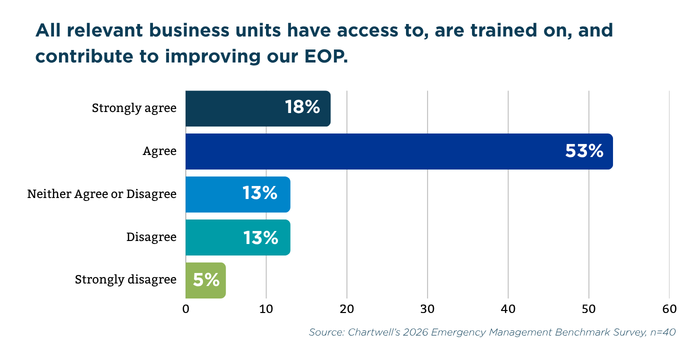
That leadership is helping drive a broader shift across the industry. Leading utilities are moving beyond treating Emergency Operations Plans as documents owned by emergency management by involving business units directly in plan development, exercises, and continuous improvement. The result is that preparedness becomes a shared enterprise responsibility rather than a compliance exercise.
From Plan Ownership to Resilience Ownership
Emergency management professionals coordinate the effort, but resilience depends on business-unit leaders, executives, and support functions understanding how their decisions affect the broader response. Leading utilities are increasingly aligning emergency management with business continuity, cybersecurity, disaster recovery, and enterprise risk management to create a more unified approach to resilience.
As threats become more complex and customer expectations continue to rise, the utilities that perform best won’t have the best plan but will work together the best.
*Requires active council membership for access.
You may also like these blog posts:
- New Chartwell Guidelines Explore Training Excellence and All-Hazards Resilience
- Utilities Discuss the Challenge of Building Buy-In for Business Continuity
- PowerUp 2026 Agenda Expands with PG&E Keynote and Utility Executive Leaders
