



Utilities Are Early to AI, and That’s an Advantage
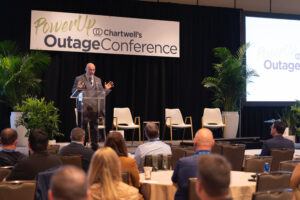
In a recent Chartwell conversation, Jason Michael Perry, Chief AI Officer and founder of Perry Labs, offered a reassuring message for utility leaders: you are not late to AI. We are still in the “AOL days of AI,” a phase where the tools are rapidly improving and the winners will be the organizations that build real capability, not just one-off experiments. Perry’s point was simple: AI is becoming a tide change technology, and teams that learn to work with it will outpace teams that avoid it.
He also grounded the hype by explaining what is new and what is not. We have relied on “narrow AI” for years through recommendations and autocomplete. Generative AI, however, is moving us along a road from chatbots to reasoners, to agents that can complete tasks with fewer humans in the loop. That shift matters for utilities because it changes what can be automated and what can be redesigned as an end-to-end workflow.
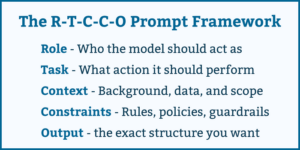
The first practical skill is prompt discipline. Perry recommended using a framework like RTCCO, meaning Role, Task, Context, Constraints, Output, to reduce guesswork and produce more reliable results. He also warned that hallucinations are not a weird edge case; they are a natural byproduct of large language models trying to complete patterns and please the user. The remedy is cultural as much as technical: do not be afraid to verify. If a model cites a study, quote, or case, ask where it came from and confirm it.
Another underappreciated issue is memory. Models have a limited context window, a finite amount of text they can keep “in working memory.” In long conversations, they may forget early details or replace them with summaries, which can quietly increase errors. For utility use cases that depend on nuance, such as policy interpretation or outage communications, it is worth designing prompts and workflows that keep key facts close at hand.
The biggest unlock is context from your own data. Perry emphasized that AI can finally work with unstructured information like PDFs, Word documents, images, and slide decks, not just rows in a database. With retrieval augmented generation (RAG), models can pull the right internal content at the moment of need. With Model Context Protocol (MCP), those connections can become persistent and action-oriented, enabling AI to both read from systems and do work across them.
Finally, Perry made a cautionary case for governance that enables progress. When companies ban AI, people often use it anyway, frequently with free tools that can expose sensitive data and create shadow IT risk. The path forward is to pair training with clear policies, then invest in the “vegetables” of data access and a single source of truth. For utilities, that foundation is what turns AI from an interesting demo into dependable capacity.
Read more about the Chartwell CX Council.
You may also like these blog posts:
- How Strategic Workforce Planning Can Dramatically Reduce Contact Center Wait Times
- Six Ways Utilities Can Turn IVR Into a Better Customer Experience
- Understanding What Residential Utility Customers Need Most
Related Insight Center research:
