




How Simplifying Customer Communications Can Reduce Arrears
By Carisa Woolstenhulme, Arrears Management Consultant | 3-minute read
When customers fall behind on their utility bills, the path from missed payment to disconnection can become complex quickly. Multiple notices, required communications, payment options, assistance programs, and account actions can create a confusing experience, particularly for customers already experiencing financial stress.
Leading utilities are beginning to view collections through a new lens: as a critical customer experience journey where clear communication and reduced friction1 can directly influence customer behavior.
The question is shifting from “How do we increase collections activity?” to “How do we make it easier for customers to take action?”
Avista, recipient of Chartwell’s 2026 Gold Arrears Management Award, demonstrates how rethinking customer communications can improve both customer and business outcomes1. Rather than adding more outreach, Avista focused on improving the effectiveness of existing communications by making them clearer, more empathetic and easier for customers to act on. The utility redesigned its collections email communications around a simple principle: customers need to understand what is happening, what options are available and what action they can take next.
By introducing targeted, actionable reminders at key points throughout the collections journey, Avista created direct pathways for customers to make payments, establish payment arrangements, or access financial assistance. The approach transformed email from a notification tool into an intervention point designed to help customers resolve issues before they escalated.
The results demonstrated the impact of reducing friction. Between July and December 2025, Avista sent more than 103,000 collection reminder emails, resulting in $3.26 million in customer payments. Of that amount, $2.8 million was prevented from progressing further through the collections process, reducing the need for additional notices, outbound calls, and potential escalation activities. More importantly, customer response improved at one of the most critical moments in the collections journey. Following the implementation of simplified, actionable reminders earlier in the process, customer action after final notices increased from approximately 15% to 30%.
Avista’s approach reflects a broader industry opportunity. Collections does not have to be a point of friction between the utility and customer. When communications are designed around customer needs and not just internal processes, utilities can improve payment outcomes while strengthening trust. The most effective collections strategies recognize that customers are often not unwilling to pay; they may be uncertain about their options, overwhelmed by the process, or unable to quickly determine their next step.
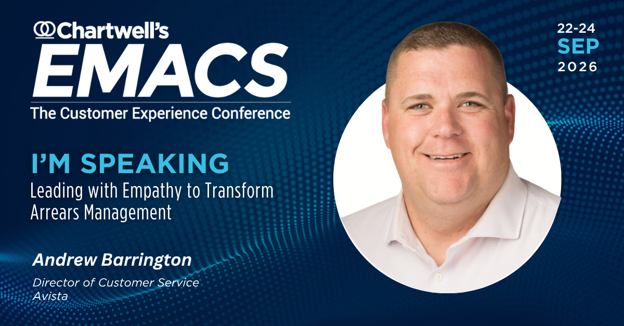
Avista’s results demonstrate an important lesson for the industry: improving arrears does not always require more communication. Sometimes, it requires better communication. When utilities make it easier for customers to understand their options and take action, both customers and the business benefit. To learn more about how Avista transformed its collections approach and improved customer outcomes, join Andrew Barrington at EMACS 2026 as he shares the strategy, implementation, and results behind this award-winning program. Register today!
Chartwell’s POWERING FORWARD Brief
Utilities looking to improve collections outcomes should focus on:
- Evaluate communications through the customer lens. Review collections notices and messages by asking: Is it clear what the customer needs to do next?
- Reduce the number of steps required to take action. Create direct pathways for customers to make payments, establish arrangements, or access available support.
- Use communications as intervention points. Identify moments throughout the collections journey where timely outreach can prevent escalation.
- Align teams around the customer journey. Bring together billing, collections, customer experience, communications and technology teams to improve consistency and effectiveness.
- Measure behavioral outcomes over activity. Track whether communications are increasing customer action, reducing escalation and improving payment resolution.
1Requires Insight Center Membership
***

Carisa Woolstenhulme brings over 20 years of utility experience across credit, collections, and customer operations. She is the founder of the Arrears Management Leadership Council at Chartwell Inc., where she helps utility leaders innovate on billing, payments, assistance, collections, customer care, field operations, community partners, and policy that improve the customer experience.
Previously, Carisa led Customer Credit Services at Salt River Project, where she managed accounts receivable for more than $3 billion in electric revenue while maintaining bad debt well below 1%. She is known for developing practical, customer-centered approaches to arrears management and affordability that balance customer needs with utility business objectives.
