



Modernizing the Utility Payment Process
By Renee Wagner, Billing & Payment Consultant | 3-minute read
Ask most utility leaders about payment modernization1 and the conversation quickly turns to payment channels: online payments, mobile apps, AutoPay, kiosks and digital wallets. While these capabilities remain important, a different conversation is beginning to take shape.
The real opportunity isn’t adding another way for customers to pay. It’s rethinking how money moves throughout the organization.
Every customer payment sets off a series of activities behind the scenes. Payments must be received, validated, reconciled, posted, and, in some cases, returned through refunds or credits. Historically, many of these processes have relied on manual intervention, disconnected systems, or paper-based workflows. As transaction volumes shift toward digital channels, utilities are recognizing that modernizing the back office is just as important as improving the front-end customer experience.
That trend was evident during a recent Billing & Payment Leadership Council2 meeting, where members shared how payment operations are evolving.
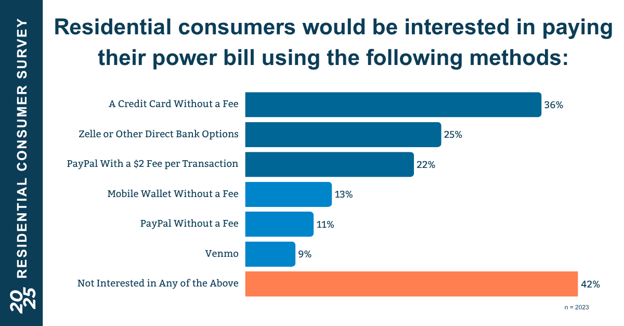
EPB highlighted its ongoing transition to lockbox processing, virtual caller payments, and digital refunds. With more than 93% of customer payments now received electronically, the utility is adapting its payment operations to support changing customer behavior while improving processing efficiency.
EPCOR shared a similarly comprehensive approach, leveraging pre-authorized payments, online banking, electronic funds transfer (EFT), electronic checks, electronic data interchange (EDI), and lockbox processing to streamline payment operations. The utility has also expanded electronic refund options through EFT and Interac e-Transfer, reducing processing time while significantly decreasing the number of unclaimed refund checks ultimately transferred to government agencies.
Although each organization has different total offerings, both are pursuing the same objective: creating a more efficient, connected payment ecosystem that benefits both customers and the business.
This work is often invisible to customers, yet its impact is significant1. Faster payment processing improves cash flow. Automated reconciliation reduces manual effort. Digital refunds shorten resolution times. Fewer paper checks lower administrative costs. Together, these improvements strengthen operational performance while delivering the fast, convenient financial interactions customers increasingly expect.
Perhaps most importantly, payment modernization is bringing together teams that have not traditionally worked closely together. Billing, treasury, customer experience, finance, technology, and operations all influence how money moves through the utility. As organizations modernize these processes, success depends less on optimizing individual payment channels and more on creating an integrated financial ecosystem that works seamlessly from end to end.
Utilities have spent years making it easier for customers to pay. The next chapter is ensuring every financial interaction, from payment to refund, is just as efficient behind the scenes as it is at the customer’s fingertips.
Members can check out the 2026 Billing Industry Survey1 results highlighting key trends in billing operations, cost structures, and digital adoption.
Chartwell’s POWERING FORWARD Brief
Utilities looking to modernize payment operations should focus on the entire financial lifecycle.
- Assess the end-to-end payment ecosystem. In addition to payment acceptance, identify opportunities to streamline payment processing, reconciliation, exception handling, and refunds.
- Modernize refund delivery. Evaluate opportunities to replace paper checks with secure electronic refund options that improve customer experience while reducing administrative effort.
- Review operational handoffs. Map how payments move between billing, finance, treasury, customer service and technology teams to eliminate unnecessary manual processes.
- Prioritize automation where it delivers the greatest value. Focus on reducing repetitive processing, accelerating reconciliation, and improving transaction visibility.
- Measure operational outcomes alongside customer outcomes. Track processing efficiency, refund turnaround time, digital adoption, exception rates, and customer effort to understand the full value of modernization.
Payment modernization is increasingly measured by how efficiently, accurately and seamlessly money moves throughout the utility.
1Requires Insight Center Membership | 2Requires Billing & Payment Customer Leadership Council Membership
***

Renee Wagner is a billing and customer operations leader with nearly 37 years of utility experience driving operational excellence and positive financial performance. Renee leads the Billing & Payment Leadership Council at Chartwell, Inc., where she facilitates peer collaboration on utility billing, collections, meter-to-cash processes, revenue cycle management and other emerging industry payment trends.
Previously, Renee held leadership roles at Xcel Energy, spanning distribution operations, performance management, billing services, payment operations, information technology, and customer-focused business transformation.
