




From Crisis to Care: How Utilities Are Rethinking Arrears Management
As utilities continue navigating the post‑pandemic landscape, arrears management remains one of the most complex and human challenges facing customer operations. Member utilities of Chartwell’s Billing and Payment Leadership Council recently identified Arrears Management as their number one concern…by a wide margin. This is not surprising, as the National Energy Assistance Directors Association reports that 16% of US households are behind on their bills.
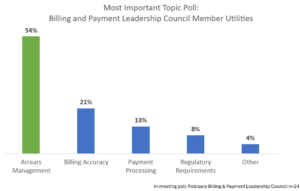
A recent peer discussion at the February meeting of Chartwell’s Billing and Payment Leadership Council highlighted how utilities are shifting from rigid, transactional approaches toward more flexible, customer‑centric strategies that balance financial responsibility with empathy.
👉 Learn how to reduce bad debt while protecting vulnerable customers in this complimentary webinar on March 25: From Arrears to Action: Modern Credit & Collections Strategies for Utilities
One utility shared how early, proactive outreach made a measurable difference. During the pandemic, teams consistently contacted customers before accounts became severely delinquent. As disconnects resumed, they leaned into prepaid programs that allowed customers to repay arrears gradually. Instead of requiring large lump‑sum payments, a set percentage of each payment was applied to past‑due balances. This approach prevented customers from falling further behind while giving them predictability and control, so much so that some customers became enthusiastic advocates for the program.
Courtesy calls also emerged as a powerful, low‑tech solution. By moving outreach earlier, calling customers two days before a potential disconnect instead of one, utilities were able to resolve more accounts through promises to pay, significantly reducing shutoffs. Longstanding payment arrangements, paired with a customer‑friendly tone, helped stabilize arrears while minimizing service interruptions and operational churn.
Another utility, operating without advanced metering infrastructure, emphasized the value of communication variety. Phone calls, emails, texts, autodials, and even a simple “yellow letter” insert in paper bills helped cut through customer fatigue. Visibility mattered too: having staff present in the field reinforced that operations had resumed and obligations were real. Just as important was empowering frontline agents. Rather than enforcing hard rules, agents were given flexibility to tailor payment plans based on individual circumstances, such as homeownership or income stability. That human touch drove payment arrangement success rates from roughly 50% to over 70%.
Despite progress, both utilities acknowledged ongoing pressure. While COVID may no longer be the primary driver, affordability challenges persist, compounded by reduced assistance funding and broader economic strain. The takeaway was clear: successful arrears management today requires early intervention, data‑informed targeting, flexible policies, and above all, a commitment to meeting customers where they are.
Read about the Billing and Payment Leadership Council.
You may also like these blog posts:
- Mobile Wallets and Autopay Lead Utility Payment Initiatives
- How Digital Outreach Is Rewriting Arrears Management
- Balancing Write-Off Strategies: Helping Customers While Protecting the Bottom Line
Insight Center Utility Customer Research:
