



Why Crisis Communications Is the New Core of Utility Resilience
When a major event hits, the public rarely sees the operational work behind the scenes. What they do see – and remember – is how clearly a utility communicates. In today’s environment, performance is judged through that lens, regardless of how strong the field response is.
This is the focus of Organizational Resilience Executive Council (OREC) Guideline No. 3: Crisis Communications, shaped by insights from Carlos D. Torres and refined by OREC members throughout 2025.
➡️ Get additional insights from Carlos D. Torres in this post: One Voice Under Pressure: Lessons from the Front Lines of Crisis Communication
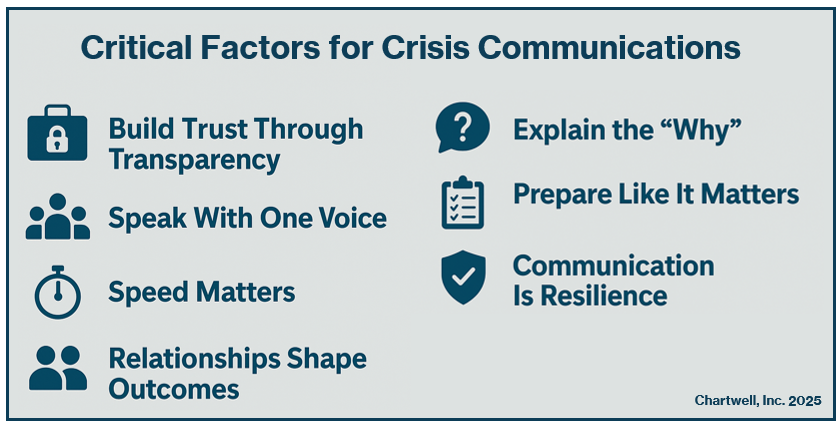
The message is straightforward: resilient organizations communicate with clarity, consistency, and credibility from blue-sky preparation through full restoration.
- Build Trust Through Transparency: The most reliable crisis rule remains simple: tell people what you know, what you don’t, and when more information is coming. Consistent, timestamped updates project steadiness and prevent confusion.
- Speak With One Voice: Every channel – outage maps, press statements, call centers, regulators, and community partners – must reflect the same message. Alignment through ICS processes reinforces trust and reduces mixed signals.
- Speed Matters: Fast, accurate-enough updates keep rumors at bay. Leadership visibility early in the event conveys confidence; silence invites doubt.
- Relationships Shape Outcomes: Effective gray-sky communication depends on blue-sky coordination. Regular engagement with government partners, emergency managers, and regulators builds the trust needed for unified messaging during major events.
- Explain the “Why:” Clear, realistic expectations outperform optimism. Whether addressing ETR changes, access challenges, or hazards, customers respond better to straight answers than to broad assurances.
- Prepare Like It Matters: Playbooks, templates, and recurring drills give communications teams the structure to act quickly and cohesively when pressure rises.
- Keep Communicating After Restoration: The story continues after the last customer is back online. Sharing what improved, what was learned, and what comes next reinforces accountability and credibility.
- Communication Is Resilience: Every crisis either strengthens or weakens trust. Utilities that invest in disciplined, unified, and honest communication build resilience not only in their messaging but across the organization.
To learn more about the Organizational Resilience Executive Council, please contact Tim Herrick.
You may also like these blog posts:
- Organizational Resilience: Defining, Governing, and Measuring for Strategic Impact
- Navigating Regulatory Expectations: Aligning Compliance, Communication, and Continuous Improvement
- Enhancing Outage Communications with Artificial Intelligence
