


How Utilities Are Using Social Media to Engage Customers Beyond Outages
By Heather Siebken – Director, Councils and Marketing
(3:15 min read) | Download as a PDF
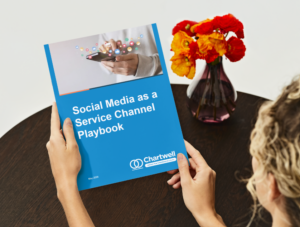
Download the Response Model Graphic
Download the Training Checklist
Download the Social Listening Keywords and Phrases Infographic
For a long time, utilities primarily used social media as a crisis communications tool. In fact, we recently reported an outstanding case where French Broad EMC used social media fearlessly to keep their customers informed during a catastrophic event.
And while utilities historically would provide updates during storms, outages, or service disruptions, they would not necessarily invite customer service requests the rest of the time. That model is changing quickly. Social media is now becoming a core part of how utilities engage customers in everyday operations, not just during emergencies.
And that shift is being driven by a simple reality: Customers already expect it. Today, customers don’t separate “utility communication” from the rest of their digital experience. They compare it to banking alerts, delivery updates, and real-time service notifications. In that context, static updates and one-way communication are no longer enough. Customers want responsiveness, clarity, and interaction.
Social media is becoming a front door, not just a broadcast channel
Utilities are increasingly using platforms like Facebook, X (Twitter), and Instagram as an extension of their customer service ecosystem. Not to replace traditional channels, but to complement them in ways that are faster and more accessible.
This matters because utility contact patterns are still heavily reactive. In many organizations, billing confusion, service disruption questions, and account issues make up a significant portion of inbound contacts. A portion of that demand is simply customers looking for quick answers or confirmation. Social media is uniquely positioned to handle that type of interaction:
- It reduces friction for simple questions
- It provides faster visibility into known issues
- It allows utilities to communicate proactively before customers escalate
In other words, it sits in the space between self-service portals and the contact center, and that space is growing. In Chartwell’s 2025 Digital Experience Benchmark Survey, it was reported that 46% of utilities are offering specialized training to some or all of their social media agents.
Engagement is shifting from announcements to interaction
The most noticeable change is not just that utilities are posting more; it’s how they are using the channel. Leading utilities are moving away from purely informational posts and toward more interactive engagement:
- Responding directly to customer questions in comments
- Clarifying billing changes in real time
- Redirecting customers to self-service tools when appropriate
- Using posts to proactively explain system-wide changes or programs
- Leveraging the power of their employees’ and followers’ networks to spread their message
This matters because it changes the dynamic from “one-way communication” to “lightweight service interaction.” And even small interactions have a measurable impact. Reducing avoidable inbound calls, even modestly, can relieve pressure on contact centers during peak periods and improve overall responsiveness across channels.
Social media is becoming a trust layer, not just a marketing tool
One of the more important shifts is how social media influences trust. Utilities operate in a low-frequency engagement environment. Customers rarely interact with them unless something goes wrong. That means perception is shaped heavily by communication quality during those moments. Social media helps fill that gap by creating:
- A visible, ongoing presence
- A consistent communication tone
- Faster acknowledgment of issues
- A sense of accessibility that traditional channels often lack
In practice, customers are not just looking at whether utilities post; they are watching how quickly they respond, how clearly they explain issues, and how consistently they show up when it matters. That visibility plays directly into trust, especially in environments where reliability is assumed until it isn’t.
The real opportunity: connecting social engagement to operational outcomes
The most mature utilities are starting to move beyond “social media management” and toward an integrated customer engagement strategy. That means social media is no longer isolated from operations. Instead, it is being tied into:
- Outage management systems for real-time updates
- Customer service workflows for issue resolution
- Communications teams for proactive messaging
- Digital self-service platforms for issue deflection
When that connection is strong, social media becomes more than a communication channel; it becomes an operational pressure valve. It reduces inbound demand, improves information flow, and helps customers self-serve more effectively. Consider joining us at EMACS this year, where one of our sessions, Award-Winning Customer Experience: Lessons From the Leaders, brings together a panel of leaders to discuss how they launched strategies to improve their digital engagement and communication approaches.
Chartwell’s ‘Put it into Practice’ Brief
If utilities want to move social media from a passive channel to an active engagement tool, the shift is not about posting more; it is about designing for interaction. Specifically:
- Treat social media as a service channel, not just a communications channel
- Assign clear ownership for response and engagement (not just posting)
- Integrate social monitoring into outage and service management workflows
- Use social posts to actively reduce avoidable inbound demand (not just inform it)
The goal is not visibility alone. It is resolution, deflection, and trust-building in real time. We’ll explore social media and digital channels further in an upcoming Customer Experience Leadership Council call. Contact Heather Siebken to learn more about the agenda and speakers.
***

Heather Siebken is a product and marketing leader and customer experience expert with more than 25 years of experience driving innovation, customer engagement, and strategic growth. She currently leads councils and marketing at Chartwell, where she designs industry forums and content that help utilities establish a customer experience strategy to navigate customer expectations and digital transformation.
Previously, Heather led product development and marketing at Omaha Public Power District, where she oversaw a broad portfolio of customer energy solutions spanning energy efficiency, demand response, electrification, and customer assistance programs. She is known for her strategic foresight, storytelling, and ability to translate complex trends into actionable business outcomes.
