


Public-Private Partnerships and Resource Strategy: Two Conversations Every Utility Should Be Having at PowerUp
Every major storm, wildfire, cyber incident, or other large-scale emergency reinforces the same reality: Resilience is no longer just about how well a utility performs within its own organization. It’s about how effectively it works with everyone around it.
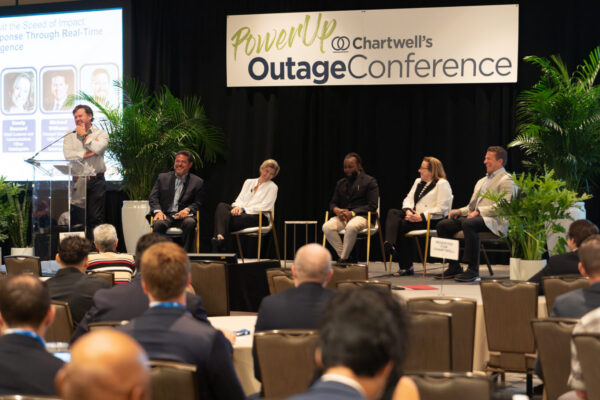
That theme will take center stage at PowerUp 2026, Sept. 22–24 in Atlanta, through two complementary sessions that examine one of the industry’s biggest challenges: building the relationships and resource strategies needed to respond when every minute matters. Together, these discussions move beyond theory to explore how utilities are adapting to a world where events are growing more frequent, more complex, and more resource-intensive.
Public/Private Partnerships During a Crisis
No utility responds to a major event alone. Successful restoration depends on coordination among utilities, emergency management agencies, law enforcement, government leaders, contractors, and countless private-sector organizations. While these relationships are often built over years, they’re ultimately tested under the most difficult conditions imaginable, when information is incomplete, priorities are shifting, and decisions must be made quickly.
This executive panel brings together an exceptional mix of leaders who have spent their careers operating in those environments.
The session is moderated by Carlos Torres, whose nearly four decades of leadership include directing emergency preparedness at Consolidated Edison through events such as 9/11, the Northeast Blackout, and Superstorm Sandy, as well as leading Puerto Rico’s power restoration following Hurricanes Irma and Maria.
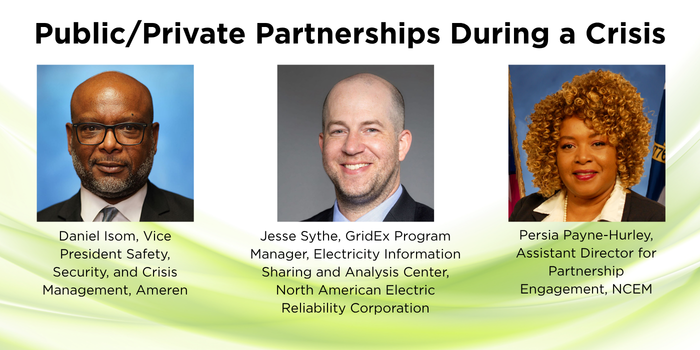
Joining him are:
- Daniel Isom, Vice President of Safety, Security, and Crisis Management at Ameren and former Chief of Police for St. Louis, brings a unique public safety perspective on crisis leadership.
- Jesse Sythe, GridEx Program Manager at NERC’s Electricity Information Sharing and Analysis Center (E-ISAC), who oversees North America’s largest grid security exercise and has extensive experience preparing organizations for worst-case scenarios.
- Persia Payne-Hurley, Assistant Director for Partnership Engagement at North Carolina Emergency Management and creator of the nation’s first operational Business Emergency Operations Center (BEOC), whose work has become a national model for government-business collaboration.
Rather than focusing solely on emergency response, the discussion will explore the structures that make effective coordination possible before disasters occur, from information sharing and resource alignment to building trust across organizations with different missions and priorities.
Mutual Aid to Market Forces: The New Era of Utility Resource Acquisition
While partnerships form one side of the resilience equation, securing the resources needed for response has become an equally pressing challenge. The mutual assistance model has served the electric industry extraordinarily well for decades. But today’s operating environment is changing. Simultaneous regional events, increased contractor demand, specialized skill requirements, and longer-duration incidents are forcing utilities to rethink how they acquire and deploy restoration resources.
This session examines how utilities are evolving beyond traditional models while preserving the collaborative spirit that has long defined the industry.
Moderator Jim Nowak, one of the industry’s most recognized experts in emergency management and mutual assistance, leads a discussion featuring leaders from utilities and contractor organizations who are shaping this evolution.
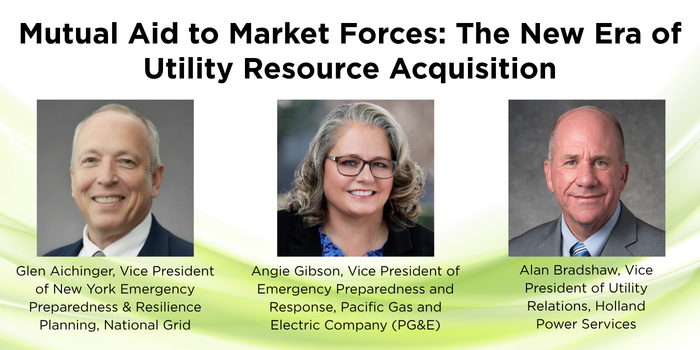 Panelists include:
- Glen Aichinger, Vice President of New York Emergency Preparedness & Resilience Planning at National Grid and member of EEI’s Mutual Assistance Executive Committee.
- Angie Gibson, Vice President of Emergency Preparedness and Response at PG&E, whose organization has developed sophisticated approaches to managing increasingly complex wildfire and all-hazards response.
- Alan Bradshaw, Vice President of Utility Relations at Holland Power Services and former Dominion Energy executive with more than four decades of operational and emergency preparedness experience.
The conversation will address practical questions utilities are wrestling with today:
- How should organizations balance traditional mutual assistance with direct contractor sourcing?
- What does effective pre-event planning look like in today’s environment?
- How can logistics and resource coordination improve when demand for crews reaches unprecedented levels?
- What lessons from recent large-scale events should reshape future resource strategies?
Two Sessions, One Bigger Picture
Viewed together, these panels tell a larger story about where utility resilience is headed. The first asks how organizations work together during a crisis. The second examines how they secure the people and resources needed to execute that response.
Both recognize that resilience has become increasingly collaborative. Success depends not only on operational excellence within a utility, but also on trusted relationships across government, industry, contractors, and neighboring utilities. For emergency management leaders, operations executives, and anyone responsible for preparing their organization for the next major event, these conversations promise practical insights grounded in decades of real-world experience.
PowerUp attendees won’t just hear about resilience; they’ll hear directly from the leaders helping redefine how the industry prepares for whatever comes next.
You May Also Like
