



Utilities, Partners Act to Mitigate Government Shutdown Effects on Vulnerable Customers
By Casey Collins, Senior Research Analyst
Rising energy costs and mounting economic pressures are putting utility customers—especially the most vulnerable—at the center of an evolving affordability crisis. During the Executive Session at Chartwell’s 2025 EMACS Conference in Dallas, industry leaders engaged in a crucial conversation about how utilities can respond to these challenges and support customers struggling to pay their bills.
Chartwell’s research shows that up to 70% of residential customers haven’t seen their financial situation improve in the past year, and utilities attest that their business customers – from small businesses all the way to key accounts – are facing current financial pressures and exhibiting signs of distress. The simultaneous cost of modernizing the grid and investing in new, resilient, and clean energy infrastructure—plus volatile fuel costs—presents a critical challenge for utilities in addressing customer affordability.
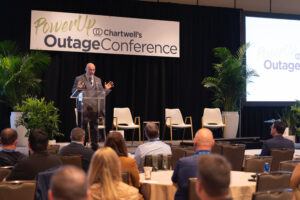
Recognizing the financial challenges that all stakeholders are facing, executives were joined by Katrina Metzler, Executive Director of the National Energy & Utility Affordability Coalition (NEUAC). Katrina’s and NEUAC’s focuses, evidenced through her policy and advocacy update, have become intently centered on the U.S. government shutdown that began on Oct. 1, 2025.
Current and prospective future repercussions create short- and long-term distress for vulnerable customers. Not the least of these include missed paychecks for various groups of federal employees, limited or insufficient funding for social benefits and assistance programs (e.g., Supplemental Nutrition Assistance Program, or SNAP, benefits), and the potential loss of funding for the Low Income Energy Assistance Program (LIHEAP).
Metzler advised executives that, in a changing and often-restrictive legislative environment for assistance programs, utilities must remain vigilant and proactive—championing policies and programs that ensure energy remains accessible for all. A united front, especially in advocacy efforts, can be best achieved by maintaining open lines of communication and taking advocacy cues from NEUAC and other utility trade partners, who are actively engaged alongside utilities’ federal or public affairs teams with congressional officials.
“I know this is top of mind and very worrisome, but we’re working tirelessly to ensure consistent programming and that nobody falls through the cracks,” Metzler said. “Amongst all the programs [at risk of limited funding], LIHEAP is the one that has the best chance of succeeding. [While] we’ve not made great strides in convincing the current administration that LIHEAP is a priority, we have made great strides with Congress. We have strong champions, both Republican and Democrat, who support the program.”
As the government shutdown stretches on, individuals, families, and businesses face additional financial constraints; however, with utilities, trade and advocacy organizations like NEUAC, and other partners investing time and effort into ensuring the provision of federal assistance for the most vulnerable populations, hope remains.
For more insights and analysis on energy affordability and policy strategies, refer to Chartwell’s Executive Issue Paper No. 09, “Energy Affordability in a Changing Policy Landscape.”
➡️ Learn more about the Vulnerable Customer Council by contacting Tim Herrick.
You may also like these blog posts:
- Executive Issue Paper No. 09 – Energy Affordability in a Changing Policy Landscape
- Faster Help, Better Outcomes: Manitoba Hydro’s Gold-Winning Grant Overhaul
- Entergy’s Digital Leap for Vulnerable Customers Garners Chartwell’s Silver Award
Utility Customer Research – Insight Center:
